Well of course it does and we’d be wrong to think otherwise. Let me explain!
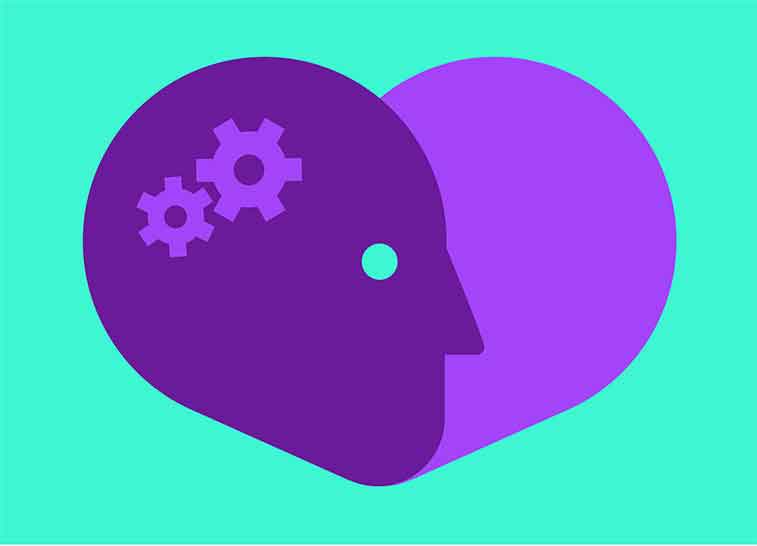
By most schools of thought the heart represents the unconscious or implicit system behind our behavior. We are typically unaware of the process or reasoning we go through to reach a decision and only know it once it happens.
The head, on the other hand, represents the conscious or explicit system behind our behaviour and so we are aware of the process or reasoning we go through to reach that conclusion.
Lets break this down to the heart is usually associated with feelings, emotions, instincts, sentiments, intuitions and dispositions, whilst the head is primarily linked with facts, logical arguments and propositions, and you won’t be surprised to know that which one takes precedence over the other has long been a point for discussion. If I go back in time, even as far back as Charles Dickens, the pragmatist author of ‘Hard Times for These Times’, we see him not only addressing the topic head on but also taking a clear position in favour of the head.
In 1854, Charles Dickens wrote in Hard times for these times:
“Now what I want is facts. Teach these boys and girls nothing but facts. Facts alone are wanted in life. Plant nothing else and root out everything else. You can only form the minds of reasoning animals upon facts”
But contrary to Dickens, Charles Darwin, a humanist and author of the theory of evolution, was of the view that ‘emotional expresion’ , and so the heart, ‘is essential for survival’.
Now, that was a long time ago so let’s see if we can figure out for ourselves where we stand today, on the heart vs head dilemma and its relevance to ‘brand’, by looking at how both impact on the approach to business across three sectors where some of the biggest shifts are taking place...
... [INSERT FULL TEXT FROM YOUR MESSAGE HERE as separate
blocks for readability] ...
In 1854, Charles Dickens wrote in Hard times for these times:
“Some persons hold that there is a wisdom of the Head, and that there is a wisdom of the Heart. I have not supposed so; but, as I have said, I mistrust myself now. I have supposed the head to be all sufficient. It may not be all sufficient; how can I venture this morning to say it is!"
Show more